
FLAT ROOFS
Roof Expert Manchester — experts at flat roof repair and replacement
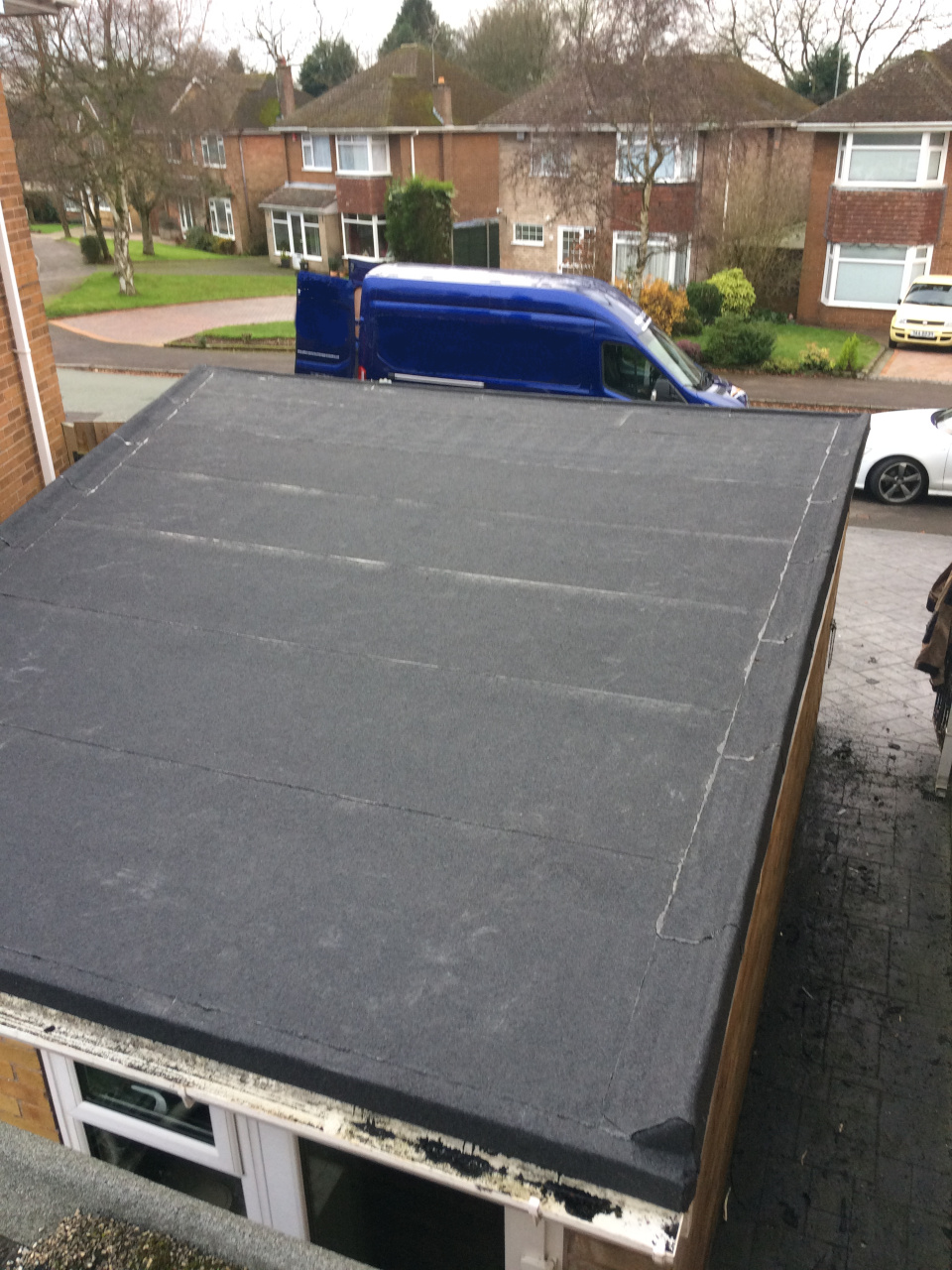
Flat roofs cost significantly less to install which is why they are so popular. Generally they do not have the service life of a pitched roof but with occasional maintenance the roof surface should be good for forty or fity years. Shown here a new felt roof covering to a house in Failsworth, Manchester.
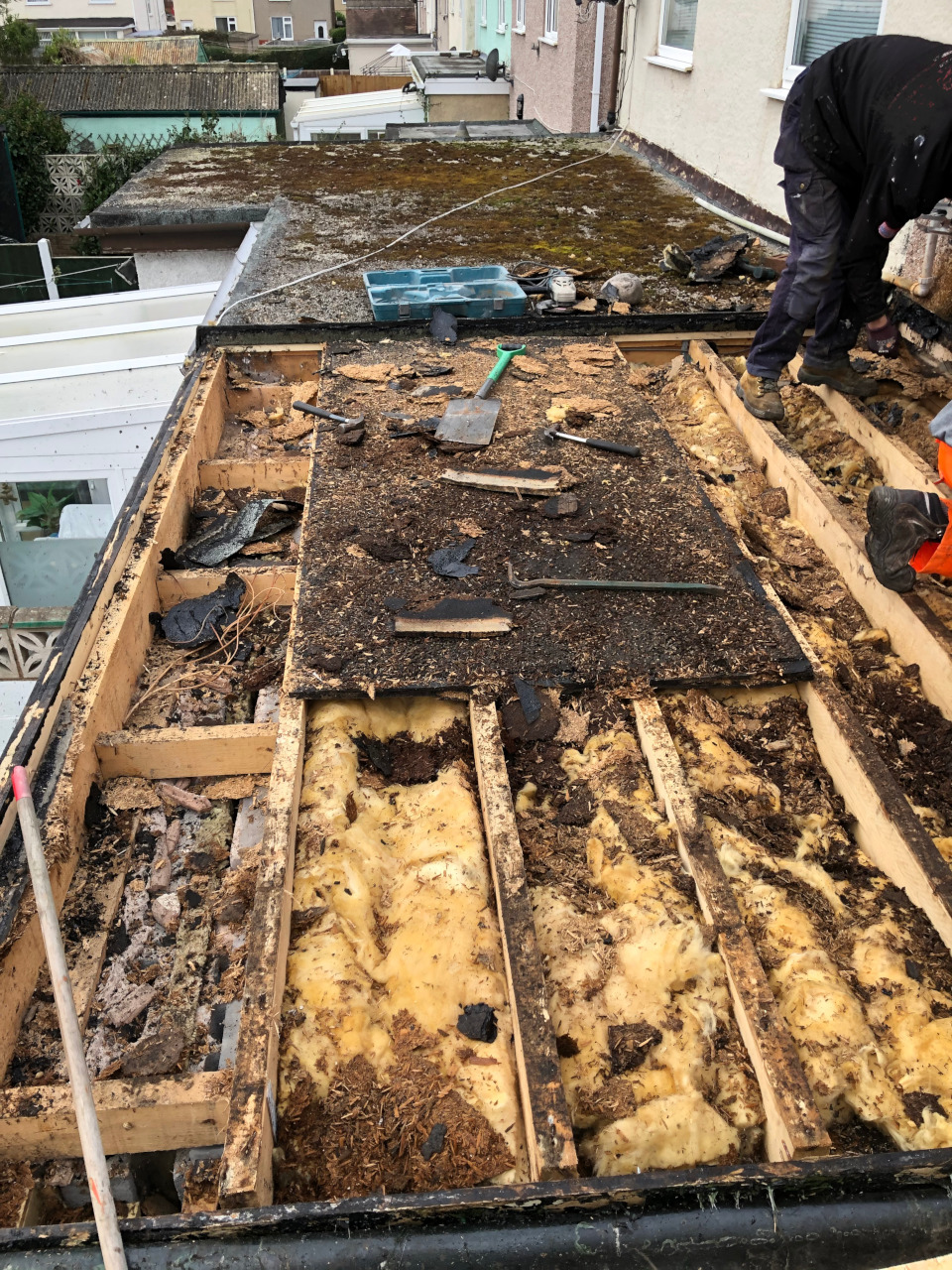
A prolonged leak will damage the roof decking. OSB (Oriented Strand Board) 18mm thick is installed to form a new deck to which a waterproof surface layer will be bonded. If the leak has soaked the mineral wool thermal insulation this will need to be replaced as mosture negates the insulation value.
EPDM Rubber
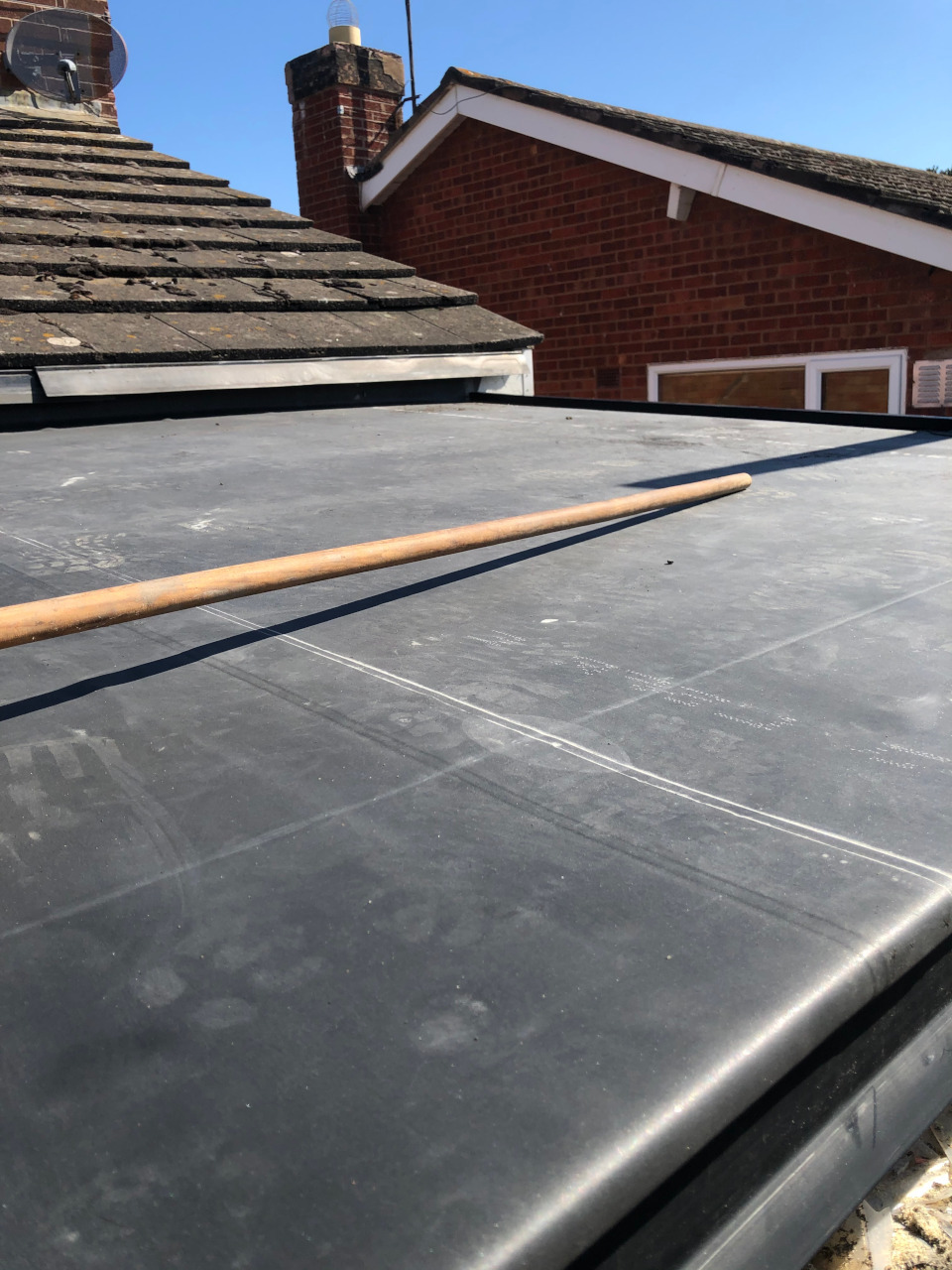
EPDM rubber membranes for flat roofs have now been in service for over 30 years and so are proving to be a durable material. They can be installed faster than traditional felt or GRP roof surfaces, therefore cost less, which is why EPDM has become the most poular choice for new roofs and flat roof repairs.
EPDM rubber is available in a number of sheet widths which means that, for smaller roofs, there need be not joints.
For most installations uPVC edge trims and gutter trims to complete the installation securely and neeatly - and to direct the rainwater to the gutters. The installation of tapered timber firrings fixed tot he joists may be necessary to ensure correct rainwater run off.
Torch-on Felt
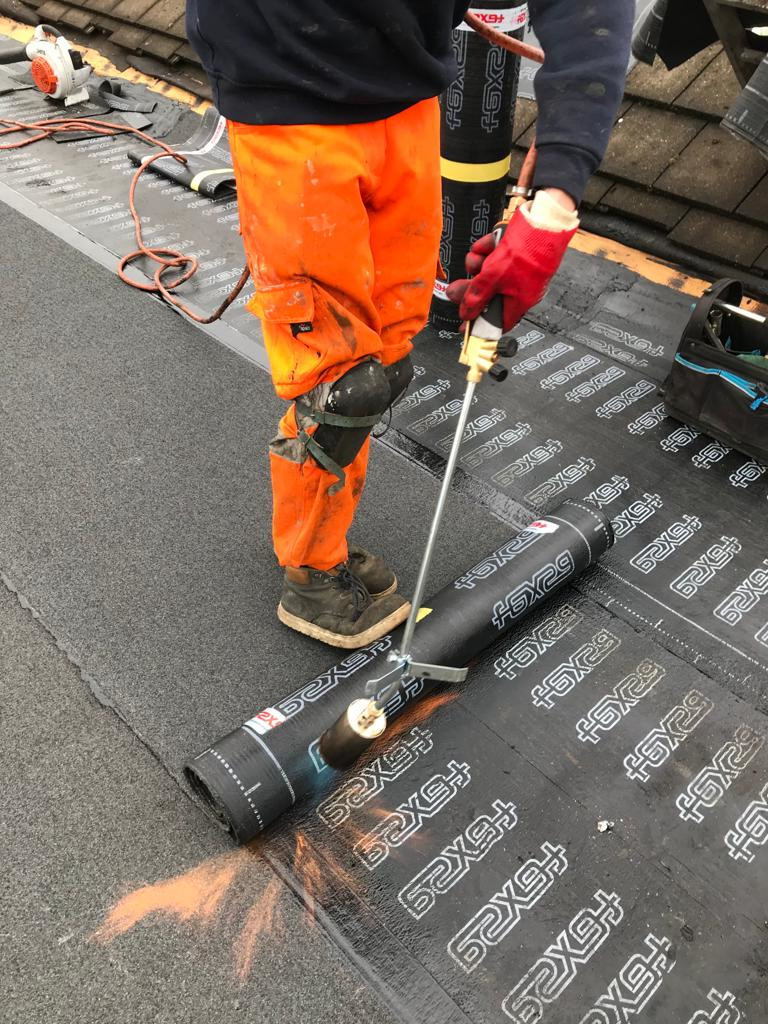
Though less common than it once was bitumen impregnated flet is still used for flat roofs. The torch on method has replaced the older poured bitumen method.
Two or three layers of felt are rolled out on the roof in staggered rows using a special blow torch to melt the bitumen as it comes into contact with the roof. The base layer is vapour permeable while the top layer is impregnated with mineral particles to improve weather resistance.
Interestingly, rolled out torch-on felt is often prefrred for both very small and very large roofs. On smaller roofs with non-standard shapes and upstands felt can be preferable as the melted bitumen ensures water-tightness of multiple joints. On commercial roofs where multiple services and ducts pass through the roof either felt or GRP is the material of choice - though GRP is significantly more expensive.
GRP
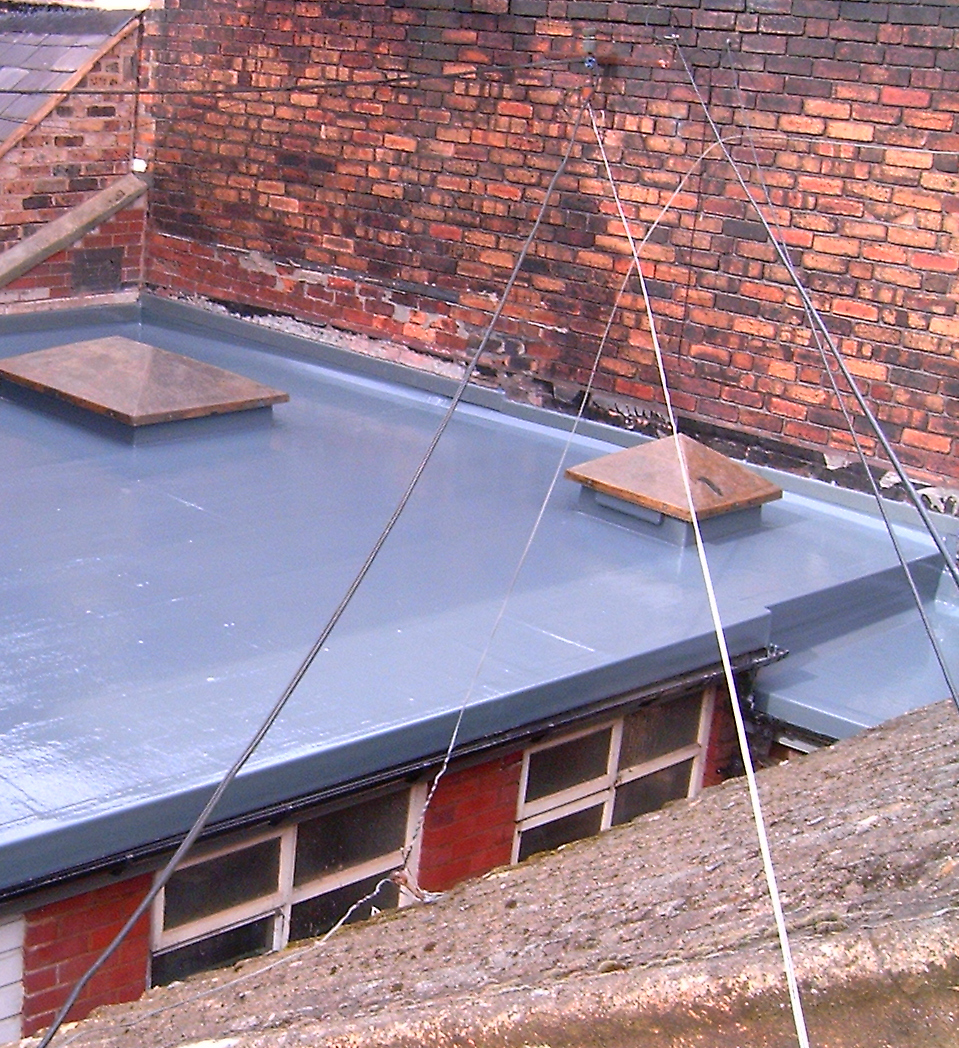
GRP, Glass Reinforced Polyester, is a mixture of polyester resin and woven fibres of glass, so thin that they are flexible. The fibres are woven into mats of various thicknesses. At the point of installation a catalyst is added to the polyester resin to cause a chemical reaction called 'cross-linking'. The result is a form of resin that is extremely hard and durable. It is quickly poured and brushed onto the roof surface. The glassfibre mat is then compressed into the resin using special rollers. The process is repeated to add as many layers of resin and mat as necessary to build a durable thickness. The glassfibre provides a degree of flexibility to the resin allowing it to flex in hot and cold conditions.
GRP is used by the Royal Navy for the hulls of minesweepers so you can be sure it is tough and waterproof. GRP is more expensive than either felt or EPDM and so is usually reserved for roofs with complex shapes, numerous upstands, steps and services which pass thorugh the roof and require careful sealing.